Daily Devotional 12-1-21

Daily Devotional 12-1-21

The Return of the King

From New Testament times anyone who has said that Jesus Christ will return one day has been considered crazy. Certainly, the idea of him bursting through the skies in a blazing display of power and glory, doesn’t come easily. And now centuries have passed and nothing has happened.

The return of the king  (21:25-33). There are times when unexpectedly, momentous upheavals occur – events that can impact the course of history. We saw this with the fall of the Berlin Wall in November 1989 and with the destruction of the twin towers in New York on September 11, 2001. The first was accompanied with joy, the second with fear and anger – which led to war.

In Luke 21:25-28 we are taken to another of Jesus’ key predictions. In Luke chapter 21 we read his prediction of events before his return: “And there will be signs in sun and moon and stars, and on the earth distress of nations in perplexity because of the roaring of the sea and the waves, …” (21:25). The words about signs in sun and moon and stars are apocalyptic language, speaking of times to come in a highly metaphorical form of expression. People will faint with fear and foreboding… at strange and forbidding events, he says.

Furthermore, he speaks his return as the coming of ‘the Son of Man’. His Jewish hearers would have understood this as the fulfilment of the prophecy of Daniel 7:13f: “I saw in the night visions, and behold, with the clouds of heaven there came one like a son of man, and he came from the Ancient of Days and he was presented before him. And to him was given dominion and glory and a kingdom, that all peoples, nations, and languages should serve him; his dominion is an everlasting dominion, which shall not pass away, …”

Daniel 7 speaks of ‘the Son of Man’ being publicly enthroned at God’s right hand. All peoples, nations and languages will be brought under his rule. Everyone throughout the universe will see it and understand its significance.

It is important that we feel the narrative impact of this prophecy. Having spoken of his arrest, death and resurrection, the destruction of Jerusalem and its temple, Jesus now speaks of his return. His first predictions came true. So too will his prediction concerning his return. On that day everyone “will see the Son of Man coming in a cloud with power and great glory” (Luke 21:27).

We can only begin to imagine what this will mean. It might be helpful to take the splendor and pageantry of royal occasions on earth – such as a royal coronation – and then multiply the scene a million times, and then a million times more. We might then begin to imagine the dazzling glory, might and majesty, power and purity of the coming of the Son of Man.

That said, we easily forget that it is a fearful thing to come near the living God. Three thousand years ago the giving of the law to Moses caused people to tremble with fear as they stood at the foot of Mt Sinai (Exodus 19:16). Isaiah’s vision of the Lord in the temple caused him to cry out, “Woe is me, …” (Isaiah 6:5). And in 2 Corinthians 5:11, Paul the Apostle says: Knowing the fear of the Lord, we persuade others…

So it’s essential to keep in mind Jesus’ words to his people: “Now when these things begin to take place, straighten up and raise your heads, because your redemption is drawing near” (Luke 21:28). We are not to be fearful or downcast, but rather lift our eyes to see the fulfillment of all that our hearts have longed for – the return of the great King in all his glory.

Jesus points to an end-time and the beginning of a totally new age – one where there will be no crying or mourning, where death itself will have passed away (Revelation 21:4).

What then should we be doing before the end time? (21:34-36) Jesus concludes with an exhortation. He wants us to start living in the light of his coming kingdom. In Luke 21:34, 35 he warns of dangers, dissipation and drunkenness. He speaks of lives dominated by short-term pleasures, dulling us to the deeper issues of life about which he is speaking.

In an earlier parable he spoke of people worn down by the cares of the world, their lives dominated by a longing for success. But such people, Jesus warns, will not be ready for the events that will unfold. To avoid disaster we need to be ‘alert at all times’. This means being aware of the Lord’s gifts and requirements to guide us through life.

Jesus wants to prepare us for his coming, which will be truly the return of the King. On that great and awesome day he does not want us to cower in fear but rather to stand before him, having the confidence of true and faithful servants. “Stay awake at all times,” he says, “praying that that you may have the strength to escape all these things that are going to take place, and to stand before the Son of Man” (21:36).

A prayer. Almighty God, give us grace so that we may cast away the works of darkness and put on the armor of light now in the time of this mortal life, in which your Son Jesus Christ came amongst us in great humility: so that on the last day, when he comes again in his glorious majesty to judge the living and the dead, we may rise to life immortal; through him who lives and reigns with you and the Holy Spirit, now and forever. Amen.

From: https://anglicanconnection.com/the-return-of-the-king-2/
Daily Devotional 11-30-21

Daily Devotional 11-30-21

How Should We Then Worship?

Three-quarters of the way through the twentieth century, Francis A. Schaeffer asked the question, “How should we then live?” His book of the same name answered the questions raised by the radical shift in our culture from modernity to post-modernity. The question that we face in our generation is closely related to it: “How should we then worship?” The “how?” of worship is a hotly disputed matter in our day. The issue has been described as the war of worship. If there has been a worship war in the church in America in the last thirty years, then surely by now its outcome has been decided. Far and away, the victorious mode of worship in our day is that form roughly described as contemporary worship. “Contemporary” in this context is contrasted with “traditional,” which is seen as being outmoded, passé, and irrelevant to contemporary individuals. Those who deem the contemporary shift in worship as a deterioration are in the minority, so it behooves us to explore the “how” question that Schaeffer first raised.

The “how” question is related to the other questions usually pursued by the journalists who seek to unwrap the details of a particular story. They ask the questions: “Who, what, where, when, and how?” In like manner, the best place for us to answer the “how” question of worship is to begin with the “who” question. Manifestly the most important question we ask is, “Who is it that we are called upon to worship with our hearts, our minds, and our souls?” The answer to that question at first glance is exceedingly easy. From a Christian perspective, the obvious reply is that we are called upon to worship the triune God. As easy as this answer is on the surface, when we see the concern given to this question throughout the Old and New Testaments, we realize that as fallen creatures it is one of our most basic and fundamental inclinations to worship something, or someone, other than the true God. It’s not by accident that the first four commandments of the Ten Commandments focus attention on the true God whom we are to worship according to His Being. The New Testament likewise calls us to honor God with true worship. Paul reminds us that at the heart of our fallenness is a refusal to honor God as God or to show proper gratitude to Him with praise and thanksgiving. So it is imperative that the Christian, at the beginning of his pursuit to understand what true worship is, gets it clear that the object of our worship is to be God and God alone.

When we move to the “where” question, it doesn’t appear to matter that much. We recall Jesus’ discussion with the woman at the well when He said that the New Testament church has no appointed central sanctuary where all true worship must take place. It’s not necessary for Christians to migrate to Jerusalem in order to offer authentic worship to God. Yet at the same time we notice throughout biblical history that people met together in a variety of locations, including house churches in the early years after Christ’s ascension. The house church phenomenon of the first century was not something intended to avoid institutional churches or to seek an underground church as such, but it was basically built on the foundation of convenience because the church was so small that the number of believers could easily meet in a home. As the church grew in number, it became necessary to find a place where a larger group could assemble for the solemn worship of God, as an act of corporate praise and celebration. So today it would seem that the obvious answer to the “where” question is that we should be worshiping together with other Christians as we gather in local churches.

The “when?” is also a question that is given attention biblically. Obviously, it is the obligation of the believer to worship God everyday, at all times. But God appoints special times and seasons for the gathering of His people in corporate worship. In the Old Testament, that special time was established early to be on the Sabbath. The term sabbath means seventh, or a cycle of one in seven. In the Old Testament economy, it was on the seventh day of the week. After the resurrection and the split of the Christian community from Judaism, it was changed from the seventh day of the week to the first day of the week, though the seven-day cycle remained intact. We understand that when the Christian community meets in solemn assembly, the communion of saints means that not only are Christians joined together locally in their own particular congregations, but that the worship of God goes beyond the walls of each individual church and incorporates churches around the nation and around the world, who, for the most part, are meeting at the same time. But the “where” and the “when” questions pale into insignificance when we return our attention to the “how” question. And the “how” question is ultimately determined by the “who” question.

We are to worship God how God wants us to worship Him. This is the apparent crisis in the revolution of worship in our day. The driving force behind the radical shift in how we worship God today is not because of a new discovery of the character of God but rather through pragmatic studies on what works to attract people to corporate worship. Thus, we devise new ways of worship that will accommodate the worship of the people of God to those who are outside the covenant community. We are told that churches ought to be seeker-sensitive, that is, they ought to design worship to be appealing to people who are unbelievers. That may be a wonderful strategy for evangelism, but we must remember that the purpose of Sabbath worship is not primarily evangelism. Worship and evangelism are not the same thing. The solemn assembly is to be the assembling together of believers, of the body of Christ, to ascribe worship and honor and praise to their God and to their Redeemer. And the worship must not be designed to please the unbeliever or the believer. Worship should be designed to please God. We remember the tragic circumstances of the sons of Aaron in the Old Testament, who offered strange fire before the Lord, which God had not commanded. As a result of their “experiment” in worship, God devoured them instantly. In protest, Aaron went to Moses inquiring about God’s furious reaction. Moses reminded Aaron that God had said that He must be regarded as holy by all who approach Him.

I believe that the one attribute of God that should inform our thinking about worship more than any other is His holiness. This is what defines His character and should be manifested in how we respond to Him. To be sure, God is both transcendent and imminent. He is not merely remote and aloof and apart from us. He also comes to join us. He abides with us. He enters into fellowship. He brings us into His family. We invoke His presence. But when we are encouraged to draw near to Him in New Testament worship, we are encouraged to draw near to a God who, even in His imminence, is altogether holy.

The modern movement of worship is designed to break down barriers between man and God, to remove the veil, as it were, from the fearsome holiness of God, which might cause us to tremble. It is designed to make us feel comfortable. The music we import into the church is music that we draw from the world of entertainment in the secular arena. I heard one theologian say recently that he was not only pleased with this innovative style of worship and music but thought that what the church needs today is music that is even more “funky.” When we hear clergy and theologians encourage the church to be funkier in worship, I fear that the church has lost its identity. Rather, let us return to Augustine who agreed that we can use a variety of music in our worship, but all that is done should be done with a certain gravitas, a certain solemnity, always containing the attributes of reverence and awe before the living God. The “what?” of worship, the “where?” of worship, the “when?” of worship, and especially the “how?” of worship must always be determined by the character of the One Who is the living God.

From: https://www.ligonier.org/learn/articles/how-should-we-then-worship

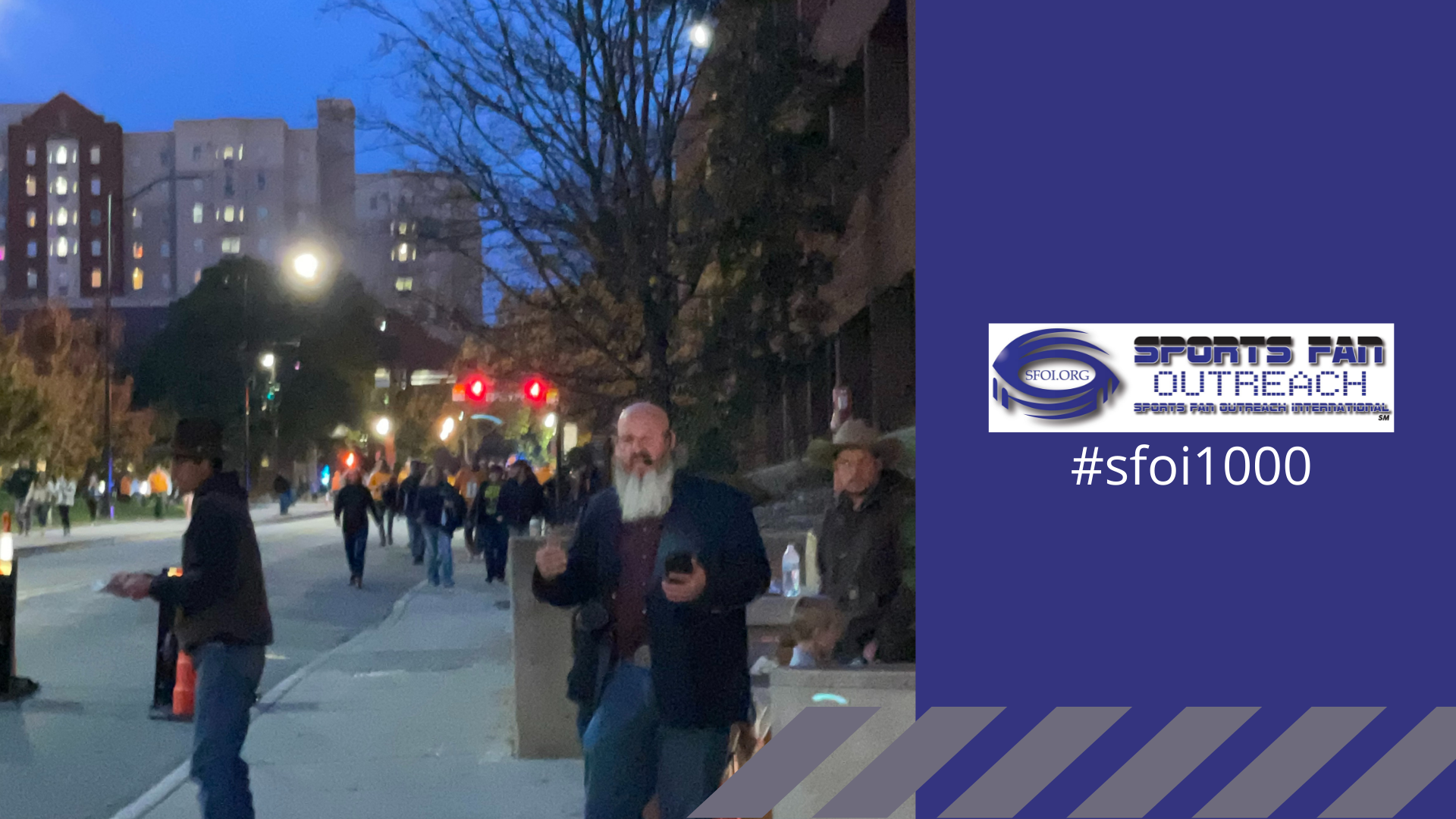
11/25 – David Robert – New Orleans Saints #SFOI1000

Game Summary

image of sports outreach

Last night in New Orleans the Saints were playing the Bills. At the corner of Garot and Loyola streets I was preaching that we needed a reminder of our history.
In Joshua 4 a pillar of 12 stones were set up as a reminder that God is our provider
400 years ago the Pilgrims celebrated the first Thanksgiving in our country. They praised God as their provider.
Presidents George Washington, Abraham Lincoln, Franklin Roosevelt and George Bush all gave praise to God as our provider in their Thanksgiving addresses.
And then I was preaching on Psalm 100.
A stack of gospel tracts was given out as well as bibles.
Many people thanked me as I was preaching. However, a negative comment was made that it was the white man who stole the American Indians land.
“It was a good thing that the white man came, because they also brought with them the knowledge of Jesus Christ and taught the Indians the true God and how to be saved from their sins.”
When the sun went down the people became a little bit rowdier and more obnoxious.
Next Saints game is next Thursday night.
A fisher of men, until the nets are full,

David

https://www.sfoi.org/New-Orleans-Saints

11/20 – Bill Adams – University of Tennessee #SFOI1000

Game Summary

image of sports outreach

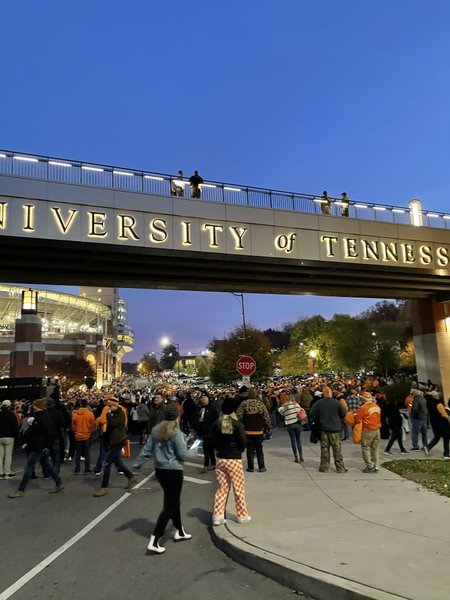
Great spot and great turnout of fans! It has been a great night and opportunity to lift up the name of Jesus!  Wendell Shrock preaching.

image of outreach international

Review of the game – Watch this short clip:

Join SFOI to preach Christ for the salvation and edification of the sports fan! 

SFOI 1000 NHL Teams Invitation https://www.sfoi.org/University-of-Tennessee

Daily Devotional 11-29-21

Daily Devotional 11-29-21 

Approaching Rebuke

You shall not go around as a slanderer among your people. . . . You shall reason frankly with your neighbor, lest you incur sin because of him.

 Leviticus 19:16-17

Slander emits a threefold poison, for it injures the teller, the hearer, and the person who is being slandered. Whether the report is true or false, we are by this precept of God’s Word forbidden to spread it.

The reputations of the Lord’s people should be very precious in our sight, and we should regard it as shameful to help the devil dishonor the church and the name of the Lord. Some tongues need a bridle rather than a spur.

Many rejoice in putting down their brothers and sisters, as if in doing so they raised themselves. Noah’s wise sons cast a covering over their father, and the one who exposed him earned a fearful curse.

We may ourselves one of these dark days need leniency and silence from our family; let us offer it cheerfully to those who require it now. Let this be our family motto, and our personal bond: Speak evil of no man.

The Holy Spirit, however, permits us to censure sin and prescribes the way in which we are to do it. It must be done by rebuking our brother to his face, not by talking behind his back.

This approach is manly, brotherly, Christlike, and under God’s blessing will be useful.

Do we shy away from it? Then we must lay the greater stress upon our conscience and commit ourselves to the responsibility, in case by tolerating sin in our friend we become partakers of it.

Hundreds have been saved from gross sins by the timely, wise, affectionate warnings of faithful friends and family. Our Lord Jesus has set us a gracious example of how to deal with erring friends in His warning given to Peter, the prayer with which He preceded it, and the gentle way in which He endured Peter’s boastful denial that he needed such a caution.

From: https://www.truthforlife.org/resources/daily-devotionals/latest/?gclid=CjwKCAjwnK36BRBVEiwAsMT8WCR8UteIwaWlAyP4o9ZIuAWio8l7qmAM1nDcB3pFiYr-jOUNkgMsShoC68IQAvD_BwE

11/20 – Ken White & Jamie Clark – University of SC #SFOI1000

Game Summary

image of sports outreach

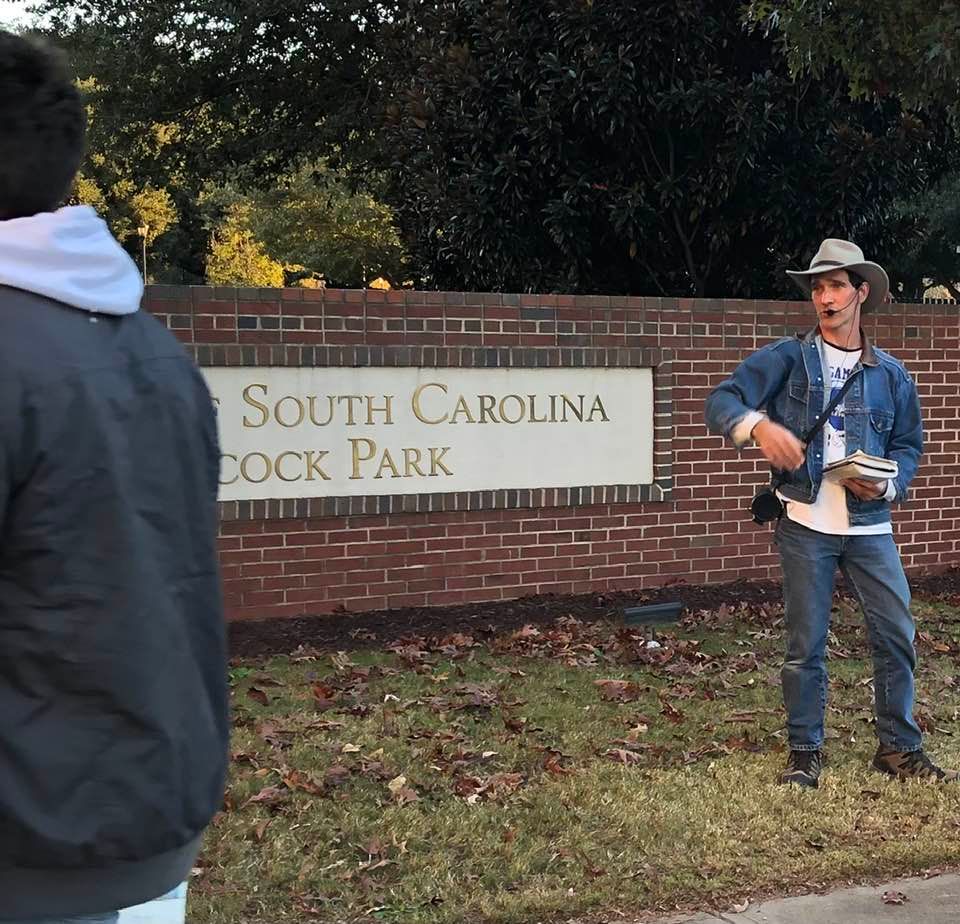
 It was a chilly evening outside of William Brice Stadium in Columbia, SC as many football fans sporadicly filled the sidewalks and God’s Saving Grace was offered to multitudes of souls. Many people heard the Gospel of Jesus Christ proclaimed, many Gospel tracts were given out, and people were confronted with the truth through conversations as the LORD opened opportunities. I believe that the LORD was Glorified through His eight servants laboring for souls! “To the Praise of His Glory!”

“The fruit of the righteous is a tree of life, And he who wins souls is wise.”
(Proverbs 11:30 NKJV)

https://www.sfoi.org/UniversityofSC

11/20 -Rod Grubb – Boise State University #SFOI1000

Game Summary

image of sports outreach

Boise State University  #SFOI1000  Outreach (11/20/2021)

Tonight was our last BSU home football game outreach of the season. The Broncos squared off against Mountain West Conference rivals the Lobos of the University of New Mexico. Weather-wise, it was pretty much what you’d expect from a late season evening football game here in Idaho. It was a cold and clear evening at Albertsons Stadium with air temps in the upper 30’s and a “feels like” temp, just above freezing.

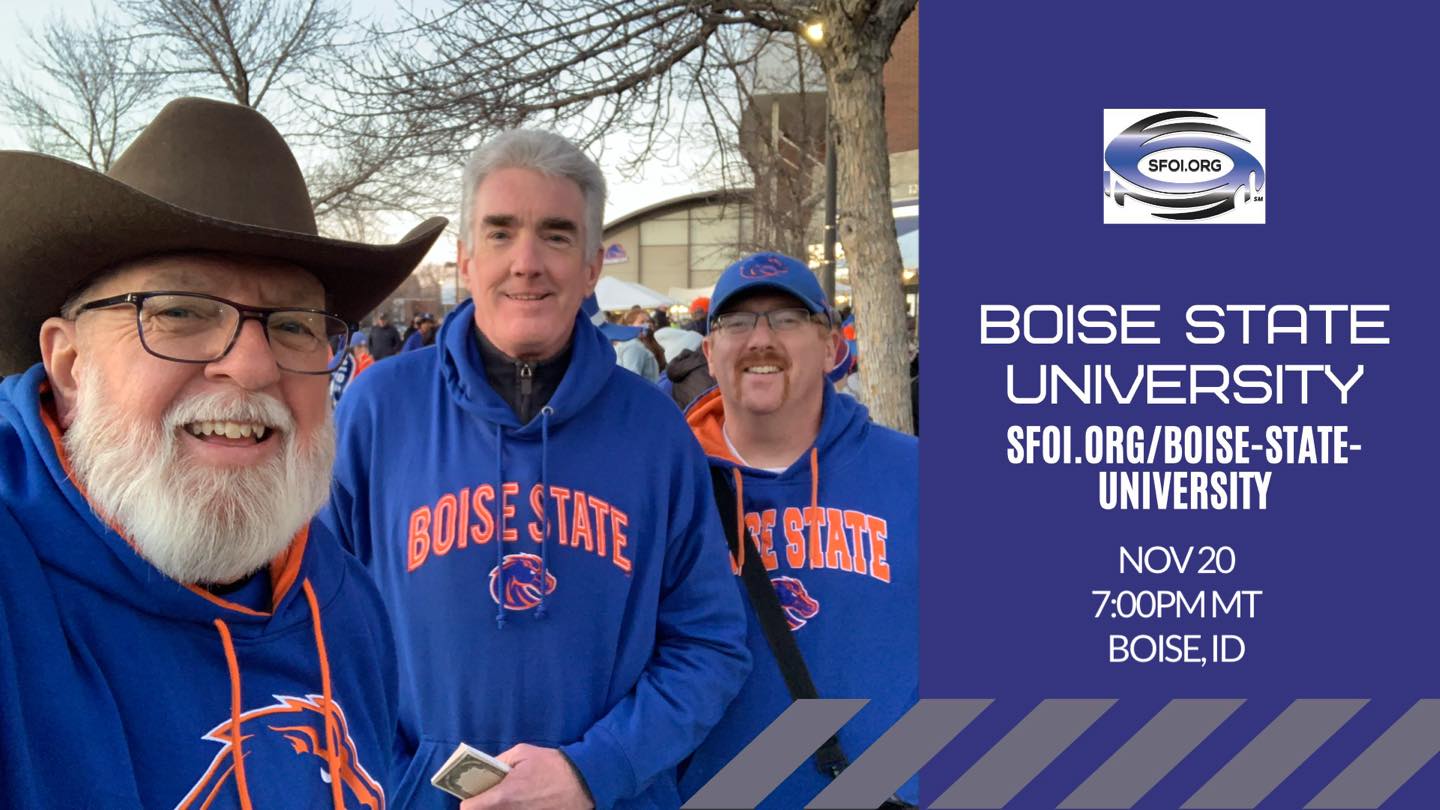
You may recognize our all-veteran outreach team— Jesse Tappert, Mike Burns and myself. And yes, we all got the memo that tonight’s game was a “blue” game, hence the blue Broncos hoodies.

As a team, we combined to pass our 500-600 Living Waters Million Dollar Bill (MDB) gospel tracts tonight. Yay Jesus Since this was our 5th home game outreach, many folks recalled getting MDB’s from us before, which is encouraging. As with most other outreaches, there is always a few folks who decline the tracts stating that they are already saved. To which I always reply with a challenge to take a couple of tracts and pass them out.  Jesse was blessed with 4 separate gospel conversations tonight and I had one. Mine was with a young teenager, Cardell, who, when asked if he knew what the gospel was, stated that he did and he had gone through AWANAS at his church. I gave him two minutes to tell me what the gospel is. “Well”, he said, “it has something to do with God.” I gently explained the gospel and stressed the importance of being able to communicate it. You just never know when you might be faced with a real “life or death” situation (like the end of the Christian movie, “God’s NOT Dead”) where a few minutes matter.

Did I mention that it was cold? Because the crowd had noticeably thinned out, our outreach team decided to call it an outreach just a little bit before kickoff. At last check, the score was 24-0 BSU at the half!

Please pray for those who heard the gospel and received tracts. May the Holy Spirit give no rest or peace until these divine appointments humbly repent and trust Jesus Christ as Lord and Savior!

“For Christ did not send me to baptize, but to preach the gospel, not with wisdom of words, lest the cross of Christ should be made of no effect.”

— 1 Corinthians 1:17

Additional Info:

For more information about this outreach and/or SFOI 1,000, please check out the following social media links:

https://www.sfoi.org/Boise-State-University

https://m.facebook.com/sfoi.org/

Twitter.com/sportsfanoutrea

Looking Ahead:

We have two outreaches in mind for this coming week, we just haven’t nailed down exactly when. Most likely, we will be back out to the BSU campus this coming week (either Monday, Tuesday or Wednesday) around midday. Then, possibly next Saturday, we will return to Indian Creek Plaza in Caldwell for the beginning of the winter season’s Winter Wonderland, probably in the early afternoon. Y’all are welcome to join us and we hope to see you there!

https://www.sfoi.org/boise-state-university

Design a site like this with WordPress.com
Get started