Events: SBO21 A Ministry with a Vision

SBO 21: A Ministry with a Vision 
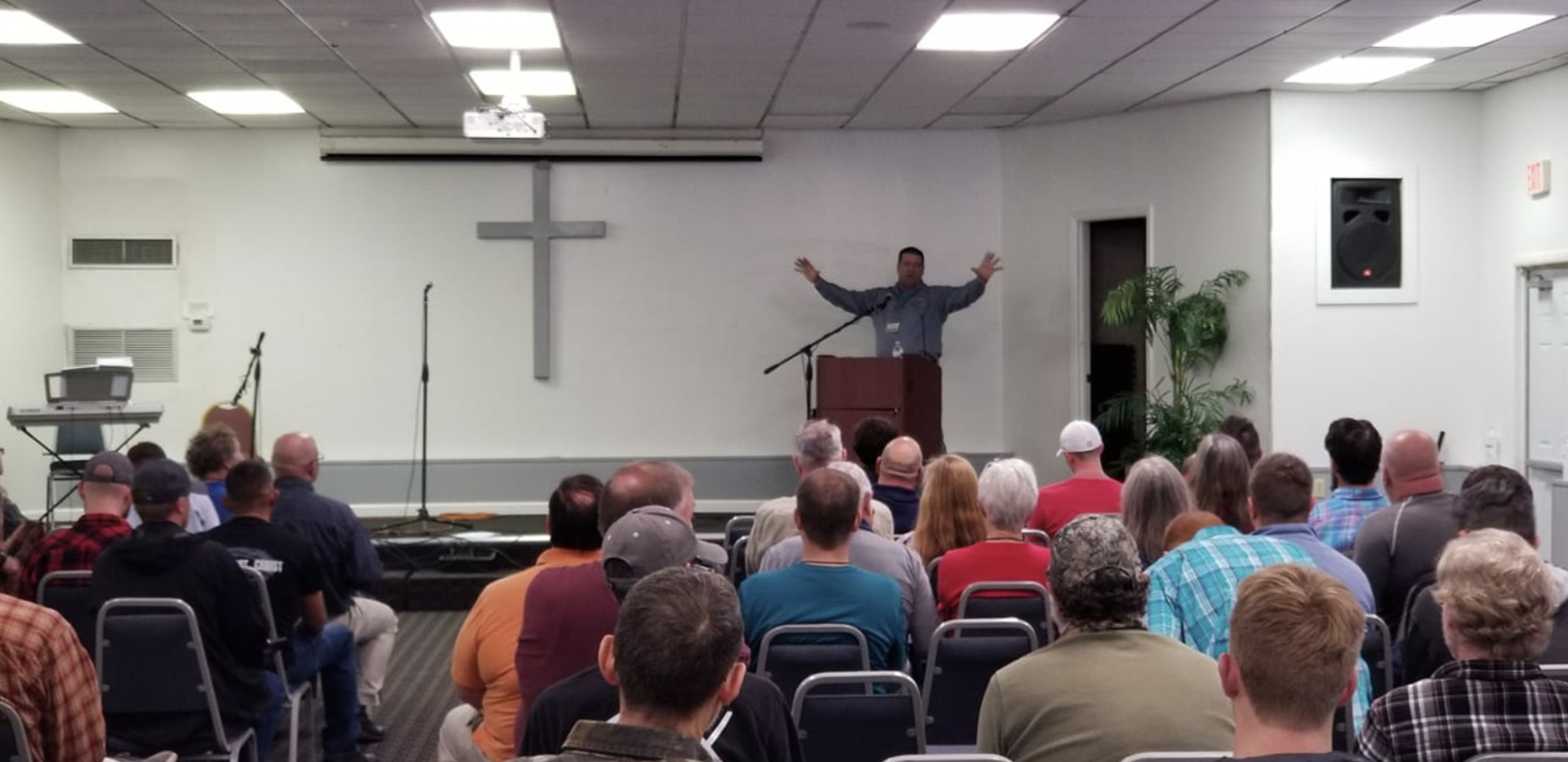
By Mark Yoho

Probably the most noted scripture related to spiritual vision is Proverbs 29:18 which reads. “Where there is no vision, the people perish: but he that keepeth the law, happy is he.” The Hebrew word chazown translated vision 35 times in the Old Testament expresses various forms of vision. No doubt in this passage it means a form of Divine communication such as an oracle or prophecy. The Old Testament prophets were noted as being people who received visions (Divine communication) from God and then, they in turn relayed that Vision to the people. Today we apply the same principle in churches and ministries. When pastors or Ministry leaders devote themselves to spending time with the Lord, God communicates with them (gives them vision) and they in turn instruct and lead the people to carry out that vision. 

This past September I had the privilege of meeting up with Brother Bill Adams,  Brother Jason Mgough,  and six other team leaders for the Super Bowl Outreach in Tampa Florida. Our time was filled with prayer, planning, and fellowship as we began to prepare for what seemed to be an almost impossible Outreach. The COVID pandemic had infected most of our plans with uncertainty and the presidential election was running full steam ahead  towards a National train wreck. We needed help, we needed to hear from God. 

Brother Bill Adams began to unpack and lay out before us the vision for the SBO 21. Very simply put the whole weekend outreach was to be “Christ centered.” We were to instruct our teams to prepare messages to preach during the Outreach that were all about Jesus. The team leaders were to teach from books they read about Jesus. The team leaders were to write  gospel tracts for the outreach that are all about Jesus. We were only allowed to use gospel signs that were all about Jesus. The purpose for this was so that our teams would be set apart from the various other groups of professed ministries that we’re working in and around the Super Bowl events. 

Somehow I just knew that this was a vision sent from God. I loved it and jumped on the bandwagon almost immediately. As time drew on and the calendar was marching towards Super Bowl Sunday I began to notice during the various prayer sessions that people were praying more Christ centered prayers and less situation centered. We began to see God answer numerous prayer requests which made this almost impossible Outreach suddenly seem doable. 

On February 4th there was an excitement in the air as the masses of evangelists began to arrive in Tampa. I was both anxious and excited at the same time, excited that the time for the Outreach had come, and anxious not knowing how things would unfold. The vision was announced to the team as a whole and the teaching each day undergirded the centrality of Christ. The challenge of the daily Outreach was not without problem yet the determination to carry out the vision persevered over the problems and by God’s grace the problems began to disappear. At the close of the outreach I heard many of the men comment on how good the outreach went, some said it was the best Super Bowl Outreach they’ve attended, others spoke of how life changing the outreach was. 

SBO 21 breathed new life into those who attended. So we could say the opposite of Proverbs 29:18 is true “Where there is vision, the people live.” What a profound lesson that is to us, that when we approach the ministry with a vision it’s life-changing. Too often we approach the ministry with education, experience, or something else we rely on thinking that somehow we know what God wants. Yet the age-old plan of God still holds true, God wants us to pay our dues with sincere prayer and devotion to catch a vision for the ministry that we perform. Will your ministry be noted as a ministry with a vision? Please spend time earnestly seeking the Lord for a vision for your ministry.

Daily Devotional 2-23-21

Daily Devotional 2-23-21

Relying on God’s Grace

The irony of the theology of meritorious suffering is that it tends to produce the very opposite effect from its original intention. What began as a call to humble willingness to suffer became an insidious tool for self-righteousness. Perhaps the most difficult task for us to perform is to rely on God’s grace and God’s grace alone for our salvation. It is difficult for our pride to rest on grace. Grace is for other people—for beggars. We don’t want to live by a heavenly welfare system. We want to earn our own way and atone for our own sins. We like to think that we will go to heaven because we deserve to be there.

All the suffering I could possibly endure could not earn me a place in heaven. Nor can I merit the merit of Christ through suffering. I am altogether an unprofitable servant who must rely on someone else’s merit to be saved.

With Paul we can rejoice in our sufferings if they enhance the glory of Christ. We can rejoice in our persecutions and look forward to the promised blessing of Christ. But the blessing Christ promised, the blessing of great reward, is a reward of grace. The blessing is promised even though it is not earned.

Augustine said it this way: “Our rewards in heaven are a result of God’s crowning His own gifts. Sola gratia.”

Coram Deo

Give thanks to God for your heavenly rewards, which are the result of God’s crowning His own gifts.

Passages for Further Study

Romans 8:18

2 Corinthians 4:16–18

From: https://www.ligonier.org/learn/devotionals/relying-gods-grace/

Events: I’m sorry, I won’t be able to come

An article by first time SBO evangelist Adam Gott

Christian Giglio, Adam Gott and Justin Sharpless

From the cold snowy streets of Cincinnati, to the warmth of Tampa and the brotherhood of SFOI

I’m sorry, I won’t be able to come.

I relayed this message to a brother in Christ and faithful evangelist, Joshua Richards. He had told me about SFOI and the upcoming Superbowl event, having invited me eagerly. My household was in a tight spot financially, and I could not afford even the most basic expenses of the trip, despite having an earnest desire to attend. To my response, Joshua replied, “ God always provides. ” – I prayed that the Lord would have His perfect will, and accepted the fact that if He wanted me there, I would be there. So I signed up and trusted in Him.

Over the course of the next month preceding the event, God provided for my household in a variety of ways, in addition to receiving the news that a congregation in Georgia had fully paid my expenses. I should not have marvelled, but I did – and so I purposed within myself that I would not waste this opportunity to glorify my King. It was the first time I would preach the salvation message far from home.

I live in Cincinnati, Ohio and left for Florida by car in the middle of the night with two brothers, Justin Sharpless and Christian Giglio. Upon arrival we were greeted by several of the evangelists and staff, who were welcoming and brotherly. As we began meeting more of the men I could sense the love of Christ between us, and the brotherhood mentioned in 1 Peter 2:17 .

We took to the streets of Tampa on Friday, organized into teams which would strategically be positioned throughout the city. It was during these precious hours that we labored in the Spirit, working the gospel into men’s ears and hearts through preaching, conversation and tract distribution. Our work was not in vain and the Spirit of God moved in a mighty way, leading us to great conversations, powerful preaching and many tracts taken.

Of all the interactions I had during that weekend, one still pierces my heart. On Sunday, near the stadium, I walked down the sidewalk giving tracts to the lines of traffic who stopped at each light. A man approached me from the right, an older gentleman with tattered clothes and a terrible limp. I immediately asked him what he needed, and he told me that he was hungry. I walked him back to our area and naturally, my team member Doc Schank insisted on giving up his lunch.

His name was Scott, and upon seeing my bible he immediately wanted to talk to me about God – I could tell by the look on his face that he was a desperate man. We sat in the shade of the trees by the walkway as he expressed his deep brokenness to me. He spoke of his plight with sin and addiction, his wasted years, and his broken family. He had spent his life trying to earn his way into heaven, and was left with nothing.

He was patient, listening intently as we worked through the concepts of sin and judgement, repentance and atonement, faith and sanctification. I wish I could share with you the look in his eyes as he began to understand. He told me that no one had ever explained these things to him, and that he never had the courage to ask. He received Christ’s testimony. I urged him to follow through with his commitment, and prayed over him. As we shared a goodbye he said to me, “You saved me today by telling me this.”

 I reminded him that Christ is truly the One who saves, but his gesture was humbling. We never deserved the compassion that our Savior displayed on Calvary; we certainly don’t deserve to play a role in the salvation of others. Conversations like this are fruit producers for the Kingdom of God. They are made possible when organizations like SFOI do the hard work of coordinating, planning and praying for months in advance – for which I am deeply grateful. Those days in Tampa are still fresh in my mind, as a hope and a reminder to keep my lamp burning at all times, ready for the service of my Savior Jesus Christ.

Daily Devotional 2-22-21

Daily Devotional 2-22-21

How Can I Cope?

One of the greatest problems in America today is mental health. Mental health centers are springing up everywhere. Teams of mental health experts are sent to the scenes of disasters to help people cope. Yet with all of this emphasis upon mental health, people are not learning to cope with the demands of life. The second greatest cause of death among teens remains suicide. What is the problem? Why is there such a wide spread lack of ability among us to adequately cope with the demands of life? Those who attempt to face the tough situations of life in a Stoic fashion, with their own strength, soon find that strength failing.

There is an answer. He is the living God. Listen to what the Bible says, “I can do all things through Him who strengthens me” (Philippians 4:13). What the Bible talks about here is not positive thinking. The Bible is talking about inner strength. It is talking about emotional stability. Some people find it difficult to cope because they see no value in their own lives. They feel useless. The answer is not bolstering pride. Far from it. Pride involves self-sufficiency. The source of real value is God. If we are at all useful in this world, God is the source of our usefulness. HE gives us our marching orders. HE gives us the inner strength and power to carry out those orders. So we could translate our text, “I can always cope by the One empowering me.”

Is this how it is with you? Or are you having a hard time coping with the things that come your way? You need to turn to God through Jesus Christ. You need to turn away from self-sufficiency and cast yourself on the mercy of God. You need to look to Him as your source of inner strength.

To help you understand this better, click here and listen to an answer to the question, “How Can I Cope?”

From: http://dennyprutow.com/daily-devotions/

Daily Devotional 2-19-21

Daily Devotional 2-19-21

The Forerunner of Mercy

Prayer is the forerunner of mercy. Turn to sacred history, and you will find that scarcely ever did a great mercy come to this world unheralded by supplication. You have found this true in your own personal experience. God has given you many an unsolicited favor, but still great prayer has always been the prelude of great mercy with you.

When you first found peace through the blood of the cross, you had been praying much and earnestly interceding with God that He would remove your doubts and deliver you from your distresses. Your assurance was the result of prayer. When at any time you have had high and rapturous joys, you have been obliged to look upon them as answers to your prayers. When you have had great deliverances out of sore troubles and mighty help in great dangers, you have been able to say, “I sought the LORD, and He answered me and delivered me from all my fears.”1

Prayer is always the preface to blessing. It goes before the blessing as the blessing’s shadow. When the sunlight of God’s mercies rises upon our necessities, it casts the shadow of prayer far down upon the plain. Or, to use another illustration, when God piles up a hill of mercies, He Himself shines behind them, and He casts on our spirits the shadow of prayer, so that we may rest confident, if we are much in prayer, that our pleadings are the shadows of mercy.

Prayer is thus connected with the blessing to show us the value of it. If we had the blessings without asking for them, we should think them common things; but prayer makes our mercies more precious than diamonds. The things we ask for are precious, but we do not realize their preciousness until we have sought them earnestly.

Prayer makes the darken’d cloud withdraw;

Prayer climbs the ladder Jacob saw;

Gives exercise to faith and love;

Brings every blessing from above.

1) Psalm 34:4

From: https://www.truthforlife.org/resources/daily-devotionals/latest/?gclid=CjwKCAjwnK36BRBVEiwAsMT8WCR8UteIwaWlAyP4o9ZIuAWio8l7qmAM1nDcB3pFiYr-jOUNkgMsShoC68IQAvD_BwE

Daily Devotional 2-18-21

Daily Devotional 2-18-21

The Second Petition: Your Kingdom Come

The first three petitions of the Lord’s Prayer are all interconnected. Wherever the name of our Father is sanctified, the kingdom has come, and wherever the kingdom is found, the Father’s will is done on earth as it is in heaven. There is a natural progression in the petitions. Each one flows from the other and into the other.

In the first petition, the supplicants acknowledge their posture as sinners before the holy God whose name they sanctify. It is a plea for holiness, which God responds to in their forgiveness and justification. With God’s gracious response to the First Petition, he also begins to answer the Second Petition before it is even made. For wherever sinners are forgiven, the kingdom of God has come to them. This gives way to the Third Petition: “Your will be done,” which the Father responds that his will is for none “to perish, but for all to come to repentance” (2 Pet 3:9).

Further, all three petitions are in the imperative. Six of the seven petitions in the Lord’s Prayer are in the imperative. The imperative is a verb tense that in non-grammar terms simply means a plea that won’t take “no” for an answer. It is a persistent supplication that won’t let go of the Object of its plea. Not only is it an imperative, but it is also emphatic, for the first word of the sentence in Greek is the verb: “Come! the kingdom of You.” Usually, in Greek, the first word in a sentence is there for emphasis. There is also a sense of urgency in the plea: “Your kingdom must come to me a sinner right now.” “I can no longer tolerate living under the kingdoms of this world.”

The phrase “Your kingdom come” expresses a total repudiation of any earthly kingdom to fill the longing of the human heart for love, forgiveness, affirmation, and other gifts we vainly seek in the many kingdoms which surround us. It is with a sense of utter loathing for this world’s failed attempts to satisfy us that we cry out: “Your kingdom come!” And yet, even as we sigh for the coming of the kingdom, we feel the tendrils of the flesh pulling us back to the fascinations of this world, calling out its seductive song, “This kingdom of the flesh is all you’ve got, better learn to love it.” But even more so, and because of this conspiracy of the flesh against us, we insist on the imperative, “Your kingdom come.” Further, the word of the kingdom urges us on, “But our citizenship is in heaven. And we eagerly await a Savior from there, the Lord Jesus Christ” (Phil 3:20). Our fathers in the faith also longed for “a better country, that is, a heavenly one. Therefore, God is not ashamed to be called their God, for he has prepared for them a city” (Heb 11:16).

The phrase “Your kingdom come” expresses a total repudiation of any earthly kingdom to fill the longing of the human heart for love, forgiveness, affirmation, and other gifts we vainly seek in the many kingdoms which surround us.

The Second Petition also announces the gospel, for we pray “Your kingdom come.” It is the kingdom that comes to us. We do not come into the kingdom. The Lord didn’t put on our lips the prayer, “Help us to make it to the kingdom.” Rather, we pray to be overtaken and overwhelmed by the kingdom of God. Thus, in the prayer we eschew all human effort, all good works, as ladder rungs into the kingdom. The kingdom comes down to us as the ladder in Jacob’s dream. Much like a helicopter rescue ladder is sent down into the dark stormy waters to bring the drowning up into safety. Those who are basically “dead in the water” have no strength left to climb up the ladder and into the safety of the chopper. So in the gospel, Christ comes down to bring us up to him. But instead of a ladder, he comes on the cross. Only his perfect sacrifice of love, counted as mine by the Father’s word that cannot lie, brings me into the kingdom.

The Second Petition also digs into our sinful nature and exposes it as utterly self-seeking and self-serving. “Your kingdom come” exposes our perverse and ceaseless efforts to set up our own kingdoms on this earth. Our own hearts often revel in the perverse whisper, “My own kingdom come.” The inclination of our sinful hearts is to establish our own fiefdoms in the family, workplace, church, society. In these small kingdoms, we become adept at manipulating, controlling, conspiring against all within our circle to become part of our kingdom and make us more powerful – more kingly – over others. But the Lord snatches away from us those destructive efforts by putting on our tongues the prayer, “Your kingdom come.”

The kingdom of God has a proper name, and his name is Jesus, Son of God, Son of Man. When the kingdoms of this earth exposed their total moral collapse in doing God’s will, the Father placed his kingdom as a small cell in that highly favored virgin Mary. When Jesus was born, the kingdom of God was born in its entire grandeur, strength, beauty, love, purity, holiness, mercy, and grace. In the incarnate Christ, the Father introduced a human being in whom the kingdom of God is fully established, from eternity to eternity. “And the Word became flesh – [read and the Kingdom became flesh] – and dwelt among us, and we beheld his glory, full of grace and truth” (John 1:14). In other words, if we may coin such a term, the incarnate Christ “kingdomnized” himself and became God’s kingdom among humanity. He became the living kingdom of God and drew us unto himself, who is the Kingdom, all the while we remain in this world awaiting all the gifts the King has for his subjects, including a new heaven and a new earth. Of himself, he said, “The kingdom of God is among you” (Luke 17:21).

Martin Luther certainly had in mind that indeed Christ himself in all his abundance is the kingdom when he commented on this petition.

From this you perceive that we pray here not for a crust of bread or a temporal, perishable good, but for an eternal inestimable treasure and everything that God Himself possesses; which is far too great for any human heart to think of desiring if He had not Himself commanded us to pray for the same. But because He is God, He also claims the honor of giving much more and more abundantly than anyone can comprehend, —like an eternal, unfailing fountain, which, the more it pours forth and overflows, the more it continues to give, — and He desires nothing more earnestly of us than that we ask much and great things of Him, and again is angry if we do not ask and pray confidently (LC.III.55-56).

Petitioning such large wealth, as the gift of Christ is given only through the gift of faith. For

faith itself is the common language of this kingdom. Faith transcends alphabets, grammars, syntax, even sounds of any language. Faith is the unspoken language of the petition, created by the prayer itself, and by which the petition ascends to the One who is the kingdom. Thus, whoever by faith dwells in him, dwells in the kingdom of God. He who has the Son has the kingdom.

“Our Father who are in heaven…Your kingdom come!”

From: https://www.1517.org/articles/the-second-petition-your-kingdom-come

Events: Heath Pucel Reflects on the SBO ’21

SBO ’21 Reflections

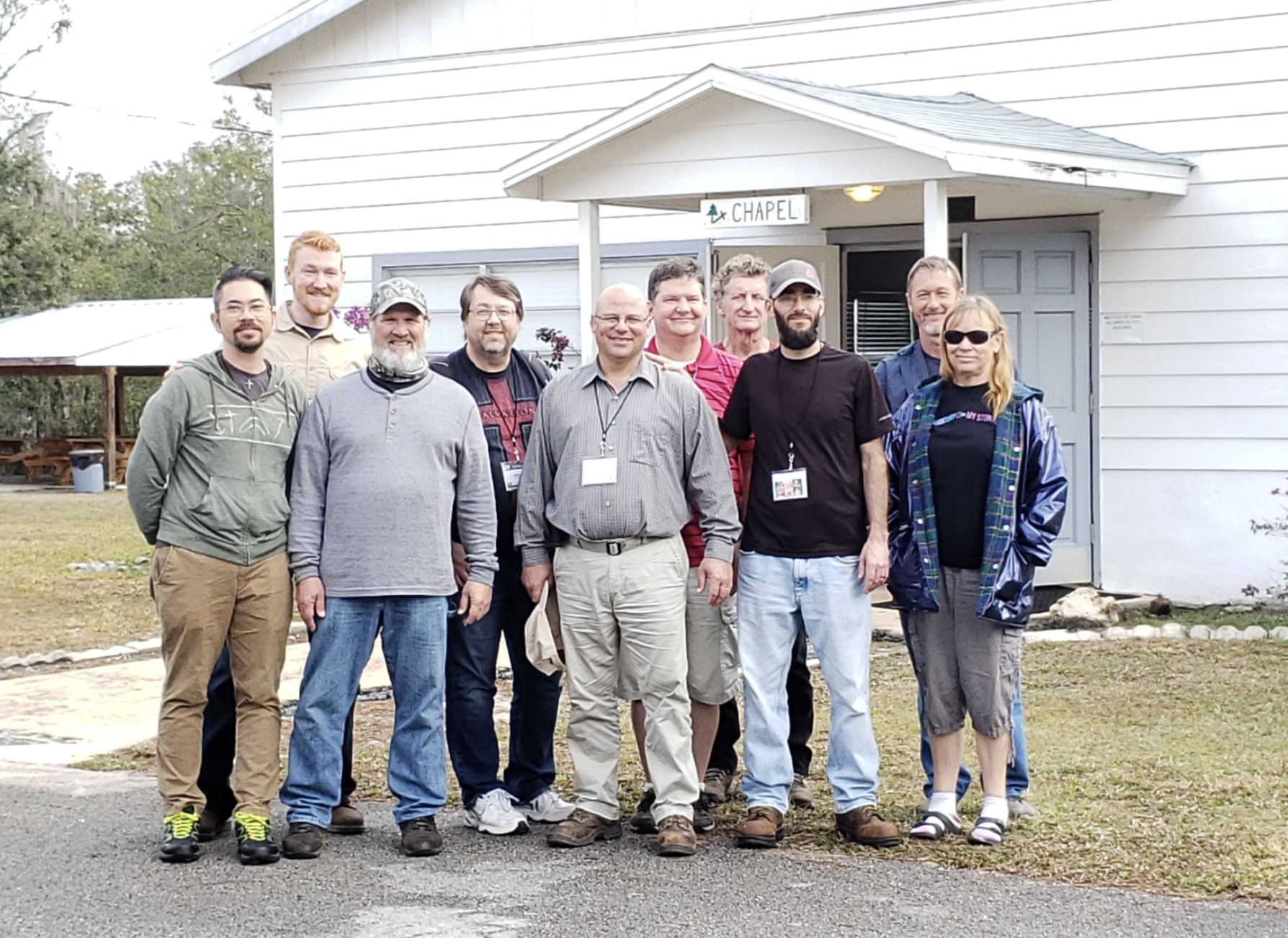
From left to right: Joe Hinson, Jacob Stafford, Joe Toy, John Coble, Dan Davis, Heath Pucel, Greg Fischer, Jeff Warner, Warren and Darlene Marquardt

It has been a week since the SuperBowl ’21 Outreach and as I am reflecting and sharing the details from the outreach. Here are some highlights!

1) I am so blessed to have labored and served with the team God planned. I enjoyed getting to know you all more and the fellowship and laboring was sweet. Thank you for letting me  learn and provide ways to get better at our trade.

2) As Paul wrote to the Galatians warning them about those who provide a false Gospel; we had the opportunity to share the Gospel through the whole counsel of God and earnestly contend for the faith with those who had a different Gospel. Pray they would be convicted with the truth.

Over the weekend, many tracts were distributed, several 1-1 conversations and the Word of God proclaiming the person and work of Jesus Christ went forth. May God receive His glory and those who heard would be convicted unto repentance.

3) This years SBO has been the best in my estimation so far. The fellowship was sweet, the unity of the teams and as a whole outreach was like nothing before. The conversations were centered around the Word and the person ans work of Christ.


A shout out to my team for being such a blessing in the unity and the spirit of Christ: Dan Davis, Joe Toy, Jeff Warner, Jacob Stafford, Joe Hinson, Warren and Darlene Marquardt, Greg Fischer.

Events: Let God Break Them

An encounter at the SBO ’21 by Jaycen Saab

February 2nd, Tampa Bay Riverwalk. 

Yesterday a dear brother in Christ, Sean (pictured), and I was preaching outside the NFL Fan Experience when a young lady came by and stopped as I was preaching. As I was sharing the Gospel with her, I explained being born-again and the evidence of a new heart that loves what God loves and hates what God hates. Or that God does hate because He is love – He hates evil. As an example, I mentioned I loved children, thus I hated abortion. Immediately her demeanor changed.

She asked, “Isn’t it mean to say you hate abortion?” To which I replied, “How else would you explain the murder of a child?” By the look on her face, I knew immediately she had had an abortion. I asked in a soft voice, “Does that resonate with you?” That very moment she burst into tears of conviction.

I assured her that Christ offers forgiveness, even for a mother who murdered her child. We continued talking as she explained how she just killed her baby 2 months ago. Knowing that Sean is very experienced in dealing with women in this area, I asked Sean to come over and pray with her.

As we continued to minister to her, God continued to deal with her. After she gave more details, remarking about carrying her baby full-term she said, “…so I didn’t have enough faith [it would work out]?” To which Sean replied in a soft, caring tone, “Correct… so you murdered your baby.”

At this point, she came undone. The reality of her grievous sin was laid bare before her. Through a quivering lip and waves of tears, she cried out, “I just want to have my Pisces baby!!” (He would have been born this month.)

This is where so many believers unintentionally go wrong in their evangelism. A Christian should NEVER comfort someone when God is breaking them. LET GOD BREAK THEM! It was heartbreaking to tell her truths, but she had to own her sin, the sin of murdering her unborn baby. 

As we finished, we prayed with her, and she took our phone numbers to call for more help and support. Please pray for her to come and finally find rest from her sin at the cross of Christ.

Get in the Game: SFOI Americas Cup Outreach 2021

Are you coming to New Zealand? 

Lord willing SFOI will be in New Zealand for two weeks from the 7th March to the 21st March 2021. 

SFOI has traveled to Auckland before for the 2011 Rugby World Cup. Auckland is a port city and has many ministry locations.

Anyone can join us for this outreach and we encourage as many as possible to do so. In general the plan is to evangelize in Auckland at the port and around the city from 10:00 AM – 6:00 PM daily.

Accommodations: private home in Auckland. [Holds 10 people. Cost per person: $750].

Meals: On your own at the home and when out.  For more information or to register please use the register here button below.

https://www.sfoi.org/americascup

Daily Devotional 2-17-21

Daily Devotional 2-17-21

Ash Wednesday…

 No-one likes a hypocrite – someone who says one thing and does another. A hypocrite is basically an actor – consciously or unconsciously. In fact, the original Greek word translated by our English word hypocrite, means actor.

In Matthew 6:1 Jesus warns: “Beware of practising your righteousness before other people in order to be seen by them, for then you will have no reward from your Father who is in heaven.”

Earlier in his Sermon on the Mount Jesus said: “…Let your light shine before others, so that they may see your good works and give glory to your Father in heaven…” Now he is saying, “Beware of practising your righteousness before other people in order to be seen by them,..”

In both places he is talking about being seen by others, yet he seems to contradict himself. Is he inconsistent?

Counterfeit religion. In chapter 5 Jesus is speaking about the moral qualities of our life in public. Now in Matthew 6 he warns against using our faith to win applause. There is a sharp difference between living as God desires and wanting to make a name for ourselves. The first glorifies God; the second only brings the momentary applause of the crowd.

The attention-seeking ‘religious’ get what they delight in – accolades and celebrity. But Jesus warns, they will miss out on the true reward that comes from the living, all-righteous God. All they have is a counterfeit religion – empty and without lasting value. John Stott commented, ‘Our good works must be public so that our light shines; our religious devotions must be secret, lest we boast about them.’

Counterfeit Giving. Look at v.2: “So whenever you give alms, do not sound a trumpet before you, as the hypocrites in the synagogues and in the streets, so that they may be praised by others.”

Trumpets may be a metaphor – we shouldn’t sound our own trumpet when we give to the needy. But trumpets may also have a literal meaning. In Jesus’ day, when there was a pressing need for charitable funds, the Temple trumpets sometimes called people to make a special contribution. Anyone watching would see who responded.

Jesus says that when we give so that others know what we are doing, whether in the street or in the synagogue, whether in church or at a charity function – we are being hypocritical.

That said, giving to the ministry of God’s Word and providing assistance for those in need is biblical. Writing on Godly and responsible giving in 2 Corinthians 8:9, Paul the Apostle says: For you know the generous act of our Lord Jesus Christ, that though he was rich, yet for your sakes he became poor, so that by his poverty you might be rich.

Hypocritical religion is not from the heart. It’s motivated by self-interest. Jesus is saying here that hypocrites give in order to be honored by those around them. And, he says, “I tell you they have their reward.”

They get what they’re after – celebrity status. But that’s all they’ll get. There is no genuine faith and no reward from God. It is counterfeit religion. This is one of the reasons that for decades naming rights of living people were not allowed in churches.

“But when you give alms, do not let your left hand know what your right hand is doing, so that your alms may be done in secret; and your father who sees in secret will reward you.”

To ensure that we’re not proud or smug about our generosity, Jesus uses the telling metaphor that the right hand should not know what the left hand is doing. No one, apart from God, will know about this private giving. He will see our real motives – our genuine concern to support gospel ministry and to care for the needy.

To be rewarded by God is the best kind of blessing. Approval by others is transient; approval from God is eternal. Aware of the deceitfulness of our hearts, we need to pray for God’s grace to avoid counterfeit giving.

Counterfeit prayer is another form of counterfeit religion that Jesus highlights.

In verse 5 we read: “And whenever you pray, do not be like the hypocrites; for they love to stand and pray in the synagogues and at the street corners, so that they may be seen by others. Truly I tell you, they have received their reward…”

Prayers in the synagogues were typically led by a synagogue member – not just the formal leaders. To be invited to lead the prayers was a mark of distinction, especially as the leader prayed at the front of the congregation.

Jesus knows how easy it is for the person leading prayer in church to focus more on the literary quality of their prayer and tone of voice, than upon God.

Now Jesus is not saying that prayer must always be in secret. He and his disciples attended services in the Temple and synagogue. On the night of his arrest Jesus urged Peter, James and John to pray for him – as a group. The first Christians regularly met together for prayer. Prayer in public was not so much the issue as the attitude of the pray-er.

In fact, the main point Jesus makes is the need for private prayer, for who we are in the privacy of our room is who we really are. Private prayer will be more honest and genuine. We are less likely to be motivated by selfish reasons. This is the kind of prayer that God hears. This is the way we can begin to counter counterfeit prayer.

How important it is on this Ash Wednesday and the start of the season of Lent, that we heed Jesus’ warning about counterfeit religion, counterfeit giving, and counterfeit prayer.

From: https://anglicanconnection.com/ash-wednesday-3/

Design a site like this with WordPress.com
Get started