Daily Devotional 3-2-21

Daily Devotional 3-2-21

Resting on the Promises

There are many ways of encouraging the Christian to stay awake. First, let me strongly advise Christians to talk to each other about the ways of the Lord. In Bunyan’s Pilgrim’s Progress, Christian and Hopeful, on their journey to the Celestial City, said to themselves, “To prevent drowsiness in this place, let us fall into good discourse.” Christian inquired, “Brother, where shall we begin?” And Hopeful answered, “Where God began with us.” Then Christian sang this song:

When saints do sleepy grow, let them come hither,

And hear how these two pilgrims talk together;

Yea, let them learn of them, in any wise,

Thus to keep open their drowsy slumb’ring eyes.

Saints’ fellowship, if it be managed well,

Keeps them awake, and that in spite of hell.

Christians who isolate themselves and walk alone are very liable to grow drowsy. Keep Christian company, and you will be kept wakeful by it, and refreshed and encouraged to make quicker progress on the road to heaven. But as you enjoy fellowship with others in the ways of God, take care that the theme of your conversation is the Lord Jesus. Let the eye of faith be constantly looking to Him; let your heart be full of Him; let your lips speak of His worth.

Friend, live near to the cross, and you will not sleep. Work hard to impress yourself with a deep sense of the value of the place to which you are going. If you remember that you are going to heaven, you will not sleep on the road. If you think that hell is behind you, and the devil pursuing you, you will not loiter. Would the innocent sleep with the enemy in pursuit and the city of refuge before him?

Christian, will you sleep while the pearly gates are open—the songs of angels waiting for you to join them—a crown of gold ready for your brow? Ah, no! In holy fellowship continue to watch and pray, that you enter not into temptation.

From: https://www.ligonier.org/learn/devotionals/resting-promises/

Get in the Game: NHL Outreach Report March 2nd-3rd

Bluejackets Home Games March 2nd-3rd

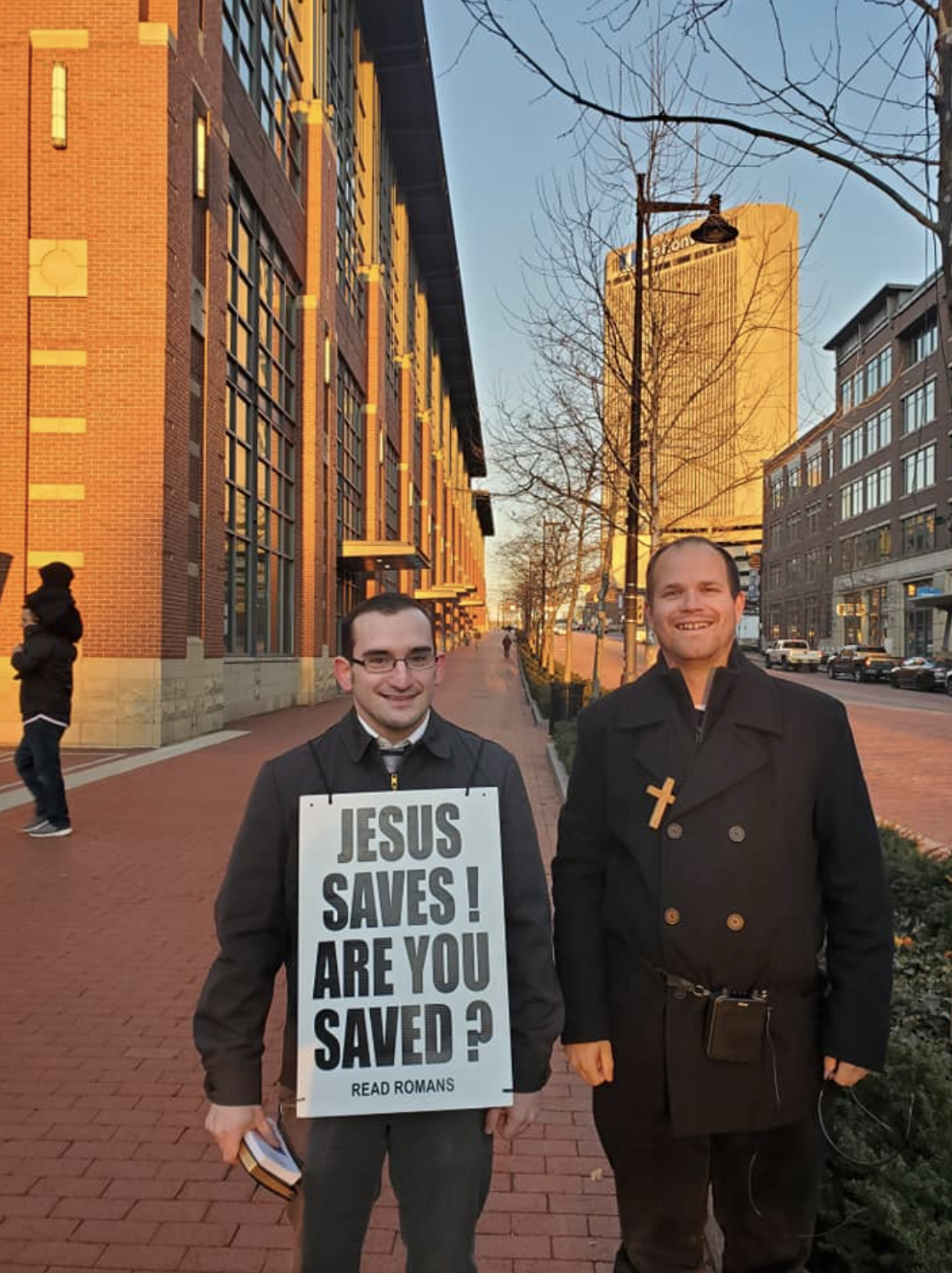
Barnabas and Joshua Richards

March 2nd – Opening Night 

Video of Joshua reading the 1662 Book of Common Prayer Service (Psalms 12-14, Deut 18, & Phil 1) and Mark Seward preaching to Bluejacket fans at Nationwide Arena in Columbus, OH

M  arch 3rd

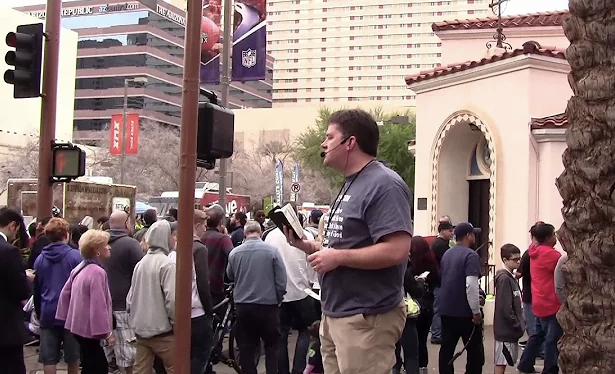
Barnabas preaching open air to Bluejackets fans in Columbus, OH

From left to right: Barnabas, Joshua Richards, Rachael Richards

Praise report! With stadium capacity down to 10% (less than 2,000 fans) Mark, Barnabas, Rachael, and myself managed to only hand out 6 tracts, but God’s Word was preached and people were listening. Several local news stations were nearby; pray that some of the preaching was recorded on their live broadcast!

Next game March 9th. See the event here: https://www.facebook.com/events/899429410871372

Get in the Game: SBO ’21 Video Highlights

SBO ’21 Update in Videos 

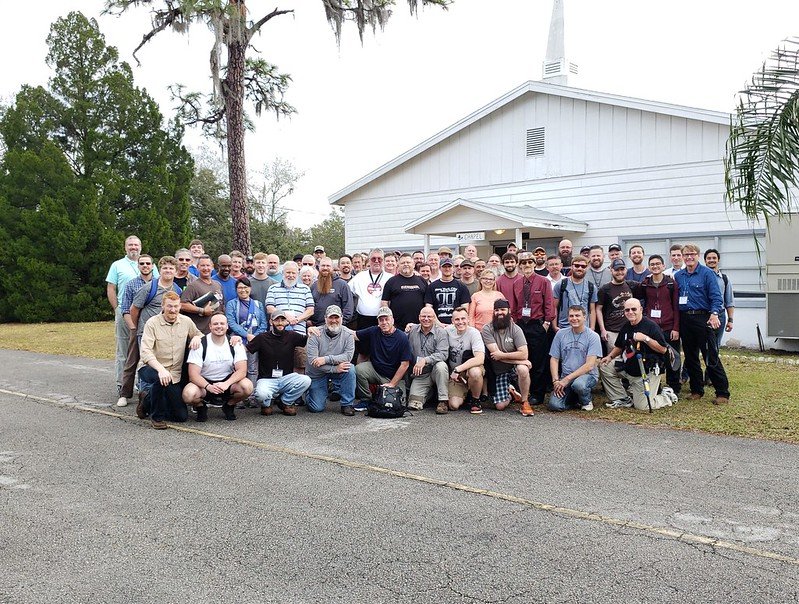
Take a look at some of the most memorable videos from our time at the Super Bowl Outreach 2021.

February 5th

New SFOI1000 Evangelist Christian Giglio preaching for the very first time

February 5th

Matthew Redando preaching at the Tampa Riverwalk

February 7th

Peter Salas  preaching the gospel at the Super Bowl and instructing people on the nature of God.

February 7th

John Coble preaching at Y’bor City

February 9th

Austin Keeler on 7th Avenue in Ybor City (Tampa), FL, for the Super Bowl Outreach. https://www.facebook.com/tom.brewer.752/videos/10159095901858256

Events: Encounter from the SBO ’21 by Alex Burt

A discussion about reincarnation 

An encounter from the Super Bowl Outreach 2021, by Alex Burt (pictured)

Met a young man named Ashton on Sunday. Asked him what he thought happened to him after he died. He told me he believed he was reincarnated and thought if he lived a good life now he would be reincarnated to a better life. If he lived a bad life he would be reincarnated to a worse life. I asked, you mean you might come back as a roach bug? He said, yes.

After sharing the Gospel with him I asked him if Christianity made more sense than reincarnation. He agreed that it did. I asked him if he thought he needed to deal with God about it and he said he did. I gave him a tract and encouraged him to do so, and went on my way. 

Please pray for Ashton. We are only ambassadors, God saves.

Daily Devotional 2-26-21

Daily Devotional 2-26-21

God’s Work in Salvation

Salvation is the work of God. It is He alone who quickens the soul “dead in…trespasses and sins,”1 and He it is who maintains the soul in its spiritual life. He is both “Alpha and Omega.”

“Salvation belongs to the LORD!” If I am prayerful, God makes me prayerful; if I have graces, they are God’s gifts to me; if I hold on in a consistent life, it is because He upholds me with His hand. I do nothing whatever toward my own preservation, except what God Himself first does in me. Whatever I have, all my goodness is of the Lord alone. Whenever I sin, that is my own doing; but when I act correctly, that is wholly and completely of God. If I have resisted a spiritual enemy, the Lord’s strength nerved my arm.

Do I live before men a consecrated life? It is not I, but Christ who lives in me. Am I sanctified? I did not cleanse myself: God’s Holy Spirit sanctifies me. Am I separated from the world? I am separated by God’s chastisements sanctified to my good. Do I grow in knowledge? The great Instructor teaches me. All my jewels were fashioned by heavenly art. I find in God all that I want; but I find in myself nothing but sin and misery. “He only is my rock and my salvation.”2

Do I feed on the Word? That Word would be no food for me unless the Lord made it food for my soul and helped me to feed upon it. Do I live on the bread that comes down from heaven? What is that bread but Jesus Christ Himself incarnate, whose body and whose blood I eat and drink? Am I continually receiving fresh supplies of strength? Where do I gather my might? My help comes from heaven’s hills: Without Jesus I can do nothing.

As a branch cannot bring forth fruit except it abide in the vine, no more can I, except I abide in Him. What Jonah learned in the ocean, let me learn this morning in my room: “Salvation belongs to the LORD.”

1) Ephesians 2:1 

2) Psalm 62:2

From: https://www.truthforlife.org/resources/daily-devotionals/latest/?gclid=CjwKCAjwnK36BRBVEiwAsMT8WCR8UteIwaWlAyP4o9ZIuAWio8l7qmAM1nDcB3pFiYr-jOUNkgMsShoC68IQAvD_BwE

Events: Hermeneutics Training Spring 21

Training testimonials from SFOI 1000 Evangelists 

Join us Tuesday, March 16th for twice weekly meetings which will take place on, Tuesday and Saturday’s. Sessions will be for six weeks with the book of 1 Samuel. Then on Tuesday April 27th Heath Pucel begins a six week class on the book of Hebrews. Meetings will be Tuesdays @ 7pm CST and Saturday Morning 8 am. During these workshops you will have a chance to put these principles into practice as you will prepare text(s) ahead of time for our small groups and then present your work for peer review.

You will learn things like the Pathway to Preparation, Context, Structure, Preaching the Gospel, Arranging and Arguing your material and more. Head over to our training page for more information and to register. Below are testimonials from evangelists who each have their own stories about how training has furthered their ability to preach well. 

Daily Devotional 2-25-21

Daily Devotional 2-25-21

Man, Woman, and the First Sin

When I was a little girl in Sunday school, I heard about Adam and Eve eating the fruit off the forbidden tree, and I colored pictures of them with strategically placed bushes and Eve’s long hair. I wondered things like, what kind of fruit was it? Why was the fruit so bad to eat? Why did God forbid it in the first place?

But the last few years, I’ve heard a different theory popularized. It usually comes in the ambiguous phrase, “Adam shouldn’t have let that serpent near his wife. That was the first thing that went wrong.” Adam and Eve eating the forbidden fruit wasn’t the first sin at all. The sin came before that. It was wrong to let the serpent in the garden.

This theory has been gaining in popularity, especially as the roles of men and women are being defined and redefined in our culture. This chivalrous statement places the blame on Adam, endangering his wife by negligence. It comes from a place of wanting to defend Eve since she was the first to take a bite. The thinking is that Adam was wrong to blame his wife when he was the one who was charged with dominion over the garden (they were actually both given dominion in Genesis 1:28), and he let something dangerous near his wife. That’s why she sinned because he enabled it.

While I appreciate chivalry very much and will thank every man who opens my door or defends me when I need defending, this claim to protect from over-blaming Eve is misguided. Yes, Adam and Eve both participated in sin. This was a joint effort of the two genders of mankind. They are both sinners. But the first sin wasn’t letting the serpent in the garden. Here’s why:

1) The Bible tells us that God told Adam not to eat the fruit, and when God found them in the garden, ashamed, he referenced the sin of eating the fruit (Gen 3:11). Are we re-writing this to say God actually meant “did you let the serpent in…?” God referenced the sin again: “And to Adam he said, ‘Because you have listened to the voice of your wife [the sin of unbelief toward God’s word] and have eaten of the tree [the action of unbelief] of which I have commanded you, ‘You shall not eat of it,’ cursed is the ground because of you; in pain you shall eat of it all the days of your life” (Gen 3:17). God didn’t say “because you let your wife talk to the serpent…” God never forbade talking to serpents or references this as the offense.

2) God allows us to be tempted. He does not tempt us himself, but he does not remove temptation from our life; he helps us stand up under it. It is not a sin to be tempted. It is sin to give into the temptation. Jesus was also tempted by the serpent, and yet he did not sin. It wasn’t a sin for him to talk to the serpent, and it wasn’t a sin for him to go near the serpent.

3) They had no knowledge yet of good and evil. This was a pre-knowledge conversation. There were no good animals and bad animals identified, and if there were good animals and evil animals, Adam and Eve didn’t have the ability to distinguish between the two. The only knowledge Adam and Eve had was what God said was good, and what God said was off-limits. The only thing referenced was eating the fruit.

4) Adam and Eve did not realize they were naked after the serpent came into the garden. Eve had a whole conversation with the serpent without realizing she was naked. They realized they were naked and exposed only after they ate the fruit (Gen 3:6-7).

5) I say this as an avid gardener and farmer’s wife: snakes go into gardens. It’s where they live. It’s like getting mad about a gopher getting into a garden or a bee. How exactly would they keep a snake out? Would they use a fence, or netting, or a spade or weapon they had formed? Why would they have a weapon before the Fall? Would they lay out some poison? In what teaching from God would they have learned to kill an animal?

6) Throughout church history, theologians have tied a parallel of sin coming into our lives through eating the forbidden fruit. One of the means that grace comes to us is through eating of the body and bread of Christ. It reminds us that we no longer eat from the tree of disobedience but from the tree (cross) of the complete obedience of Christ. While this parallel has been made throughout the ages, it is completely lost when all of a sudden, eating the fruit isn’t how sin came into the world and we claim that letting Satan in the garden was the pre-sin sin.

7) The trickle-down effect of this incorrect teaching is that we start to fence in the laws that God gave us. All of a sudden, it’s not wrong to sin; it’s wrong to go near people who sin. Instead of declaring sin evil, we start saying, “but why were they in that situation to begin with? Weren’t they at fault just for being there?” We start assessing if people deserve sympathy or not. We start forbidding things that God never forbid. We start putting expectations on ourselves and others that God did not put on us. What does it do to our theology when the first sin wasn’t a sin of unbelief but a sin of negligence?

While sin came into the world through unbelief, salvation comes through belief.

We should always seek the Lord for wisdom, and it is often wise to avoid tempting situations. But Jesus was around sinful people— even the serpent himself, and yet was without sin. Instead of fixing our eyes on Christ and living by the Spirit, Christ has given us as a means of avoiding sin; we try the strategy of legalism instead. It’s the plan of extra-laws as a means of avoiding sin. When we add to God’s law, not only do we question why Jesus did things we think ought not be done, but we also hold back from showering grace and compassion on those around us because they “allowed that situation.”

Instead of turning to grace because we have all broken God’s law, we just add more laws as a means to a solution.

When it comes down to it, the serpent gave a different story than God did to Adam and Eve. God said one thing, and Satan said the other. Why was eating the fruit so significant? Because they wouldn’t eat it unless they didn’t believe what God said. The first sin was an act of unbelief. It was an act that proclaimed that either God didn’t know what he was talking about or that he was flat out lying.

But while sin came into the world through unbelief, salvation comes through belief.

We will be put in tempting situations our whole lives. God has allowed that, and since the Fall, it feels even heavier. But the core sin has not changed: through Jesus Christ, do we believe what God has said about our redemption, or do we think he either doesn’t know or is lying? Through unbelief, we will not enter his rest, but through belief in God’s Word, we will see our salvation.

From: https://www.1517.org/articles/man-woman-and-the-first-sin

Daily Devotional 2-24-21

Daily Devotional 2-24-21

Gestalt Phenomenon

‘We have only one life to live! We need to live it well.’

How many of us really believe this? Most people have a sneaking suspicion that there is more to life – that death is not the end of our existence.

C.S. Lewis in Mere Christianity commented, If I find in myself desires which no experience in this world can satisfy, the most probable explanation is that I was made for another world.

Come with me to a significant question that Jesus put to his close followers. We read it in Mark 8:28: “Who do people say that I am?” he asked.

Up to this point, Mark tells us, Jesus’ followers seemed dull and obtuse in their understanding of him. They had seen first-hand his power and authority when at a word, he had healed the sick, commanded the powers of evil, and even raised the dead to life.

On one occasion they had been in a boat with him when a sudden storm threatened their very lives. When they cried out in fear, he calmed the tempest at a word. “Have you no faith?” he’d asked them. They saw his many miracles and they heard his teaching, yet they still didn’t understand.

Let’s think about this. Most of us have seen pictures that have two perspectives. We look at the drawing one way and we see a vase. We look at it another way and we see a face.

Sometimes we can look at a picture like this for hours and only see one thing. The second perspective remains hidden. Then we blink our eyes or turn our head and look back, and there the second perspective is. We wonder why we didn’t see it before. Psychologists call this a Gestalt phenomenon. It comes from the German word meaning shape or pattern.

The phenomenon can’t be broken up into logical stages. We can’t get half-way. It’s all or nothing. We either see the second perspective or we don’t.

Opinions about Jesus are a little like this. There have been times when I have talked with people for hours about him – answering questions, making points, developing the case that Jesus is who he claimed to be. Yet often people don’t see what is so obvious to me.

The ability to recognize the uniqueness of Jesus is an insight. We can’t organise it. It’s a perception we must have. It comes, not as a conclusion to a logical argument, but as a gift.

In the same way that people can be perplexed by picture puzzles, the disciples couldn’t make proper sense of Jesus.

Then came a critical moment. Jesus had taken them away to Caesarea Philippi, “Who do people say that I am?” he asked. Mark tells us they cited the popular perceptions: some say you’re Elijah, others, John the Baptist, and others, one of prophets.

It was obvious to everyone that Jesus was someone very impressive, but there had been impressive people before. The general consensus amongst the people seems to have been that Jesus belonged to the group of great ones in Israel’s history.

But Jesus was not content with this, “What about you?”. He pressed them: “Who do you say that I am?”

Suddenly, Peter seems to have got it. He’d probably thought about it before, but it was too crazy for words. But now the penny had dropped, and his blurred vision cleared. Jesus wasn’t just a prophet. He was the One the prophets had foreshadowed.

We can almost hear a click as Peter saw this new perspective. “You are the Christ”, he said.

How did Peter work this out? Was it the outcome of reasoned research? No. The moment of insight came, as it does for every true believer – out of the blue. It wasn’t a deduction or a discovery. It was revelation!

But there was something else: inspiration! The ministry of the Holy Spirit. In Matthew 16:17 we read Jesus’ words: “… Flesh and blood has not revealed this to you, but my Father in heaven.”

It is here that we find the key to the meaning of life. To see that Jesus is no mere man but God in the flesh, is to see that there is much more to life than what we experience now. For to understand that Jesus of Nazareth is God’s Messiah, God’s eternal Son who has set aside his true glory and become one of us, opens our minds and hearts to a hope and a joy that satisfies our deepest longings.

As we reflect on these deep matters of life we see that there is something mysterious in the way God opens our eyes. As we come to know the Jesus of the Gospel records, we come to realize that there are critical moments when we are conscious that Jesus is personally asking us: “Who do you say that I am?”

How do we come to experience this? We don’t have the advantage of having Jesus with us in the flesh. But we do have the reliable accounts from those who did meet him face-to-face – the Gospels of Matthew, Mark, Luke and John. And we note that the account about Jesus is not just written up by one man, but four!

Richard Borgonon, a keynote speaker at the recent Anglican Connection Online Conference, spoke of a new Bible-reading series through the Gospel of John: ‘The Word One-to-One’. As the notes are already in place, all we need to do for friends we invite to coffee is to be ‘a page-turner’. The Word of God continues to do its work as in the days of Jesus.

And there is something else. God’s Holy Spirit is at work, convicting people everywhere of sin and opening blind eyes to who Jesus really is – the Christ, God’s Son, our Lord and Savior. Revelation and inspiration. A life-changing Gestalt moment!

From: https://anglicanconnection.com/gestalt-phenomenon/
Events: SBO ’21 Evangelists on the Radio

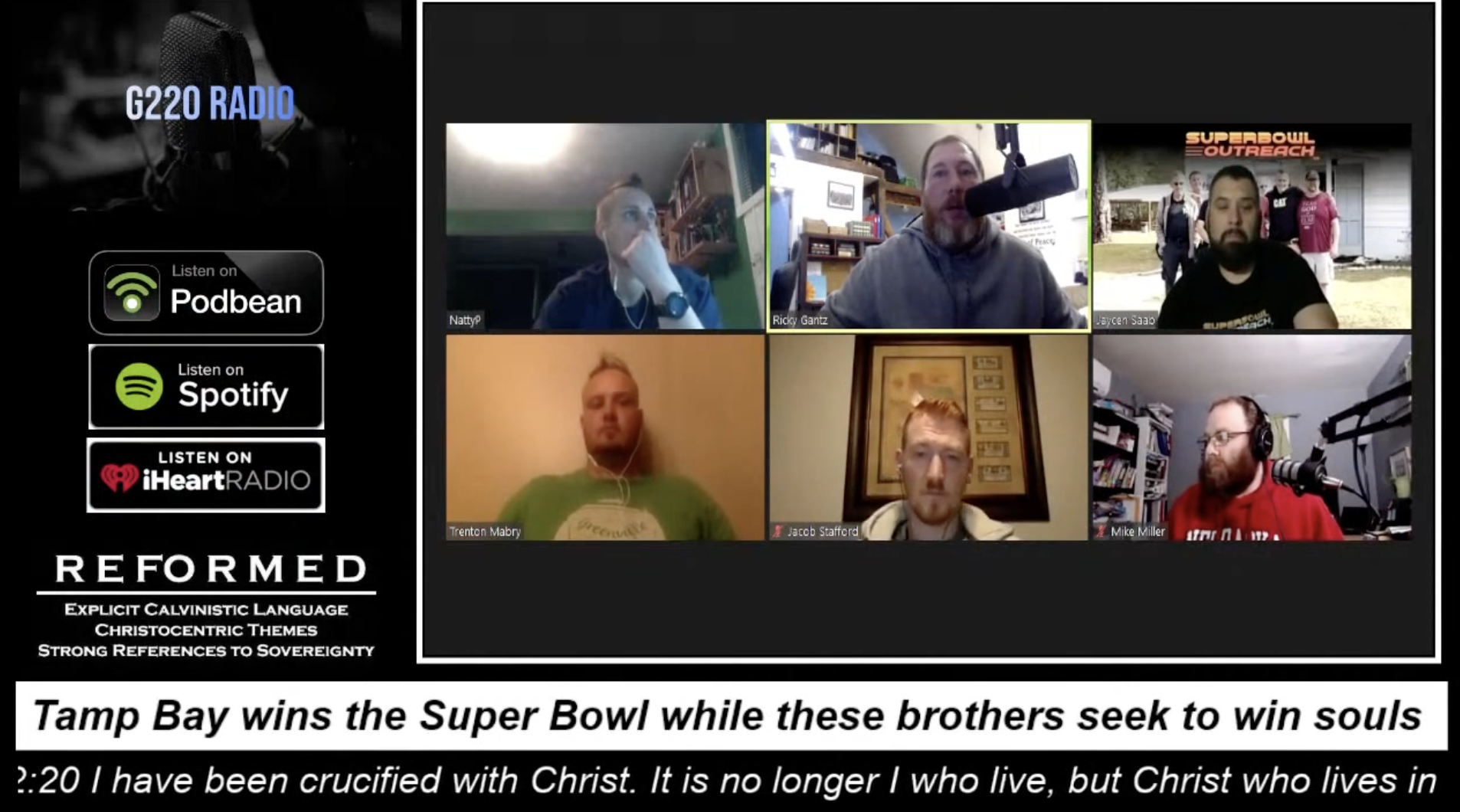
SFOI Evangelists speak about their time at the SBO on air 

Jaycen Saab and fellow evangelist Jacob Stafford recently appeared on G220 Radio’s YouTube channel and talked about their time at the SBO ’21 on a show called;

Tampa Bay wins the Super Bowl while these brothers seek to win souls

Take a look at the radio broadcast here: https://youtu.be/NlQznQxWFVI

Design a site like this with WordPress.com
Get started